
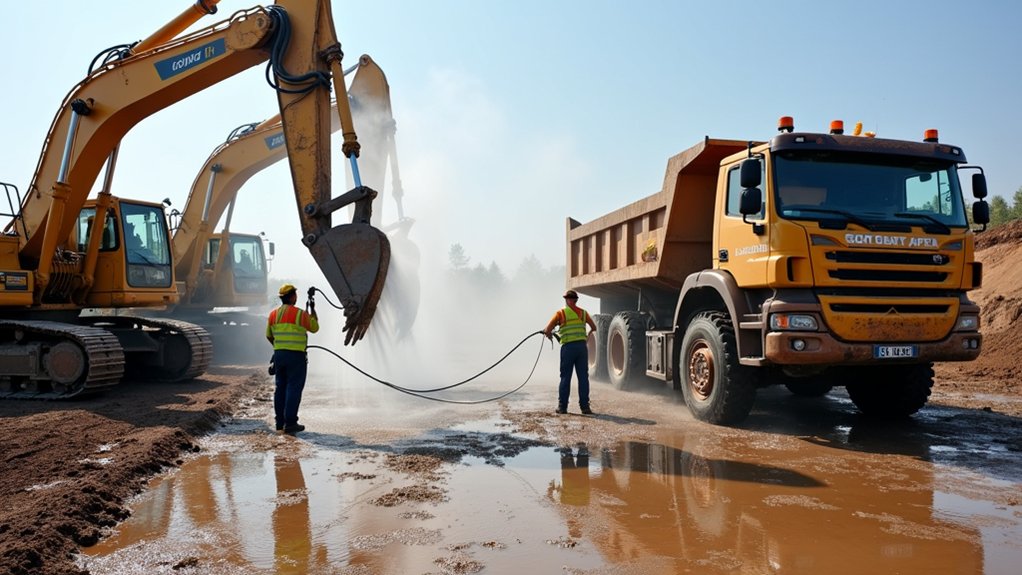
You need heavy-duty washing equipment because it enhances safety, boosts your machinery’s performance, and prevents costly damage from corrosion. It reduces operational costs by cutting down on repairs and maximizing efficiency. It aligns with environmental standards, lessening your ecological footprint. Additionally, maintaining clean equipment can elevate your professional image, showcasing attention to detail and a commitment to excellence. These benefits not only optimize operations but also provide an edge in competitive markets, promising further insights.
Enhancing Safety and Compliance
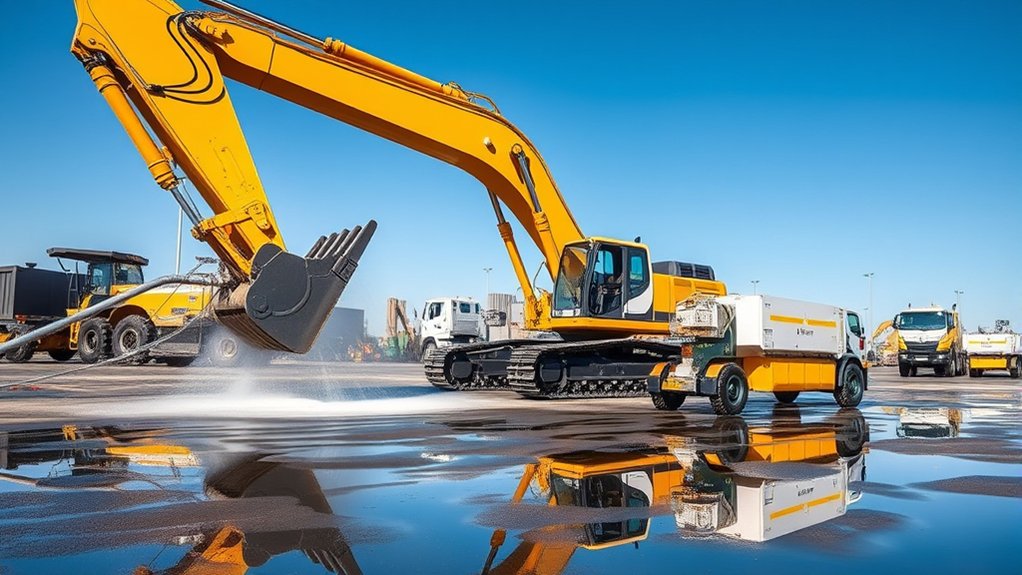
Enhancing safety and compliance in the operation of heavy-duty washing equipment is vital for contractors who want to guarantee the well-being of their workforce and meet regulatory standards.
You’ll need to make certain that safety signage is prominently displayed on all equipment to alert operators and passersby to potential hazards.
Additionally, maintaining rigorous regulatory documentation practices is important. This includes keeping detailed maintenance logs, training records, and incident reports.
Regularly updating these records not only helps in compliance audits but also guarantees you’re prepared in case of any safety inspections.
Clear communication of hazards and risks through proper signage and documentation supports a safer work environment, ultimately protecting your team and solidifying your commitment to safety and regulatory adherence. Implementing eco-friendly practices can also enhance safety while minimizing environmental impact.
Boosting Equipment Performance and Efficiency
When you effectively clear debris from your heavy-duty equipment, you’ll notice a significant boost in performance and efficiency. Clean machinery guarantees sensors work accurately, enhancing the precision of automated systems and reducing operational errors. Additionally, preventing long-term damage to your equipment through regular cleaning can save contractors from costly repairs down the line.
Debris Clearance Benefits
Maintaining heavy-duty washing equipment isn’t just about keeping things clean; it’s an essential step in boosting performance and efficiency for contractors. When you regularly clear debris, you enhance resource allocation and streamline project planning.
Clean machinery experiences reduced wear and tear since grime and dirt cause friction and abrasion in moving parts. By washing equipment daily, you prevent debris from accumulating and clogging filters, which could otherwise lead to costly repairs.
This proactive approach also extends equipment lifespan, cutting down on long-term maintenance costs by preventing premature part wear. Additionally, washing helps maintain ideal operating temperatures by removing heat-retaining grime, ensuring your machinery runs smoothly.
Sensor Accuracy Improvement
While precision in equipment operation is essential, sensor accuracy plays an even bigger role in boosting performance and efficiency for contractors.
By enhancing sensor accuracy, you can monitor real-time data like load and pressure, supporting predictive maintenance and reducing costly downtime.
Precise calibration guarantees that sensors remain reliable across varied conditions, maintaining their effectiveness over time. This accuracy, critical for project management tools, helps you stay on top of equipment health and performance.
Additionally, improved process control through pressure sensors allows for peak resource distribution, saving energy and enhancing safety.
Retrofitting existing machinery with advanced sensors prepares your equipment to meet future demands, assuring compliance and operational excellence.
Embracing sensor accuracy improvement is key to maximizing your heavy-duty washing equipment’s potential.
Protecting Against Corrosion and Premature Wear
To protect your equipment against corrosion and premature wear, focus on preventing rust formation, preserving structural integrity, and eliminating abrasive grime.
Heavy-duty washing removes corrosive substances like salt and chemicals, which can lead to rust and weaken metal surfaces over time.
Preventing Rust Formation
When it comes to preventing rust formation on heavy-duty washing equipment, implementing effective strategies is essential to extend the lifespan of your machinery and avoid premature wear.
Establishing regular cleaning schedules helps you remove contaminants like dirt and moisture, which are prime culprits in rust development. Thoroughly washing your equipment prevents dust and debris from accumulating on metal surfaces.
After cleaning, applying protective coatings provides an extra layer of defense, shielding the metal from environmental threats.
Don’t overlook the importance of immediate rust removal; tackle any spots right away using grinding or chemical methods, followed by repainting.
Additionally, storing equipment in dry, climate-controlled environments with dehumidifiers greatly reduces the chance of rust, ensuring your machinery stays in top condition.
Preserving Structural Integrity
Ensuring your heavy-duty washing equipment remains in peak condition means understanding how to preserve its structural integrity. When you’re working on large-scale projects, it’s essential to prevent chemical and natural degradation.
Oils and fuels can speed up surface degradation beyond corrosion, while mold spores weaken wood and concrete over time. Salts and minerals may cause concrete spalling if not properly removed, and graffiti solvents can dissolve protective coatings.
Keeping equipment clean also enables the effective application of protective coatings, ensuring that epoxy and sealed coatings bond well. This also supports systems like cathodic protection.
Additionally, reducing thermal stress risks is significant; accumulated debris can insulate components, causing overheating or even fires. Regular cleaning helps maintain safety and equipment longevity.
Eliminating Abrasive Grime
Tackling abrasive grime effectively is essential for protecting your heavy-duty washing equipment against corrosion and premature wear. When grime accumulates, it can lead to significant issues like corrosion damage and abrasive wear. Here’s how you can keep your equipment in top shape:
- Preventing corrosion damage: Regular cleaning removes corrosive substances like road salts and chemicals, ensuring metal components don’t degrade over time.
- Reducing abrasive wear: By eliminating particles such as dirt, silica, and sand, you prevent friction-based wear on moving parts and maintain the efficiency of cooling systems.
- Maintaining protective surfaces: Regular washing preserves protective coatings, reducing exposure to environmental stressors and minimizing risks like galvanic corrosion.
Achieving Financial Savings and Cost Reduction
Investing in heavy-duty washing equipment can considerably reduce your operational costs over time.
You’ll achieve financial savings by avoiding additional costs from frequent repairs and replacements associated with cheaper machines. High-speed extraction capabilities cut cycle times, slashing energy and water consumption per load.
Opt for commercial-grade machines with advanced conservation features, optimizing water and energy use effectively. ENERGY STAR-certified models further decrease water and energy bills, using less water and relying less on hot water cycles.
Durable construction materials and robust components mean less frequent maintenance, reducing unexpected repair expenses and operational downtime.
Maintaining a Professional Image and Reputation

A professional image is essential in the contracting industry, and maintaining your heavy-duty washing equipment plays a significant role in that. Clean equipment not only shows your commitment to industry cleanliness standards but also reduces downtime, keeping projects on track. Clients notice these details, and they affect your reputation positively.
Consider these benefits:
- Compliance with Standards: Adhering to safety protocols through regular cleaning guarantees compliance and reliability, reinforcing your professional image.
- Efficiency Perception: Clean equipment signals operational reliability, reducing unproductive costs and improving client perceptions.
- Professional Presentation: Aesthetically maintained machinery impresses clients during on-site evaluations, enhancing your image.
Integrating project management software and document sharing helps streamline maintenance, guaranteeing your equipment stays in top condition and maintaining your stellar reputation.
Optimizing Operations With Professional Services
When you optimize operations with professional services, you access significant advantages for your heavy-duty washing equipment.
By incorporating specialized cleaning, you effectively manage projects, ensuring your equipment is always in top shape. This proactive approach removes corrosive substances and contaminants, extending the lifespan of your machinery and preventing costly repairs.
Efficient project management means you’re reducing operational costs by addressing minor issues before they escalate, thereby avoiding unexpected downtime. By keeping your equipment well-maintained, you boost its resale value and extend replacement cycles, which is essential for long-term project success.
Additionally, improved equipment performance is achieved by clearing air filters and radiators, ensuring engines run smoothly.
Streamlined operations lead to faster project timelines and consistent production schedules.
Meeting Environmental and Safety Standards
To meet environmental and safety standards in heavy-duty washing operations, you need to implement thorough strategies that address both compliance and operational efficiency. This involves understanding and adhering to environmental regulations as well as safety protocols. Here’s how you can achieve this:
- Implement Closed-loop Systems: These systems reclaim washwater, reducing freshwater demand and minimizing contaminated runoff, helping you align with environmental regulations.
- Staff Training on BMPs: Training your team guarantees they understand best management practices, reducing noncompliance risks and potential fines.
- Utilize Proper Waste Disposal Methods: Confirm pollutants like oils and metals are processed through licensed facilities, preventing soil and water contamination.
Conclusion
Investing in heavy-duty washing equipment is like giving your business a sturdy shield; it enhances safety, boosts performance, and prevents costly damage. You’ll meet environmental standards and maintain a professional image that clients trust. By optimizing operations and guaranteeing compliance, you’re not just protecting your equipment, but also your reputation and bottom line. This strategic move guarantees long-term savings and efficiency, paving the way for a cleaner, more successful future in the industry.