
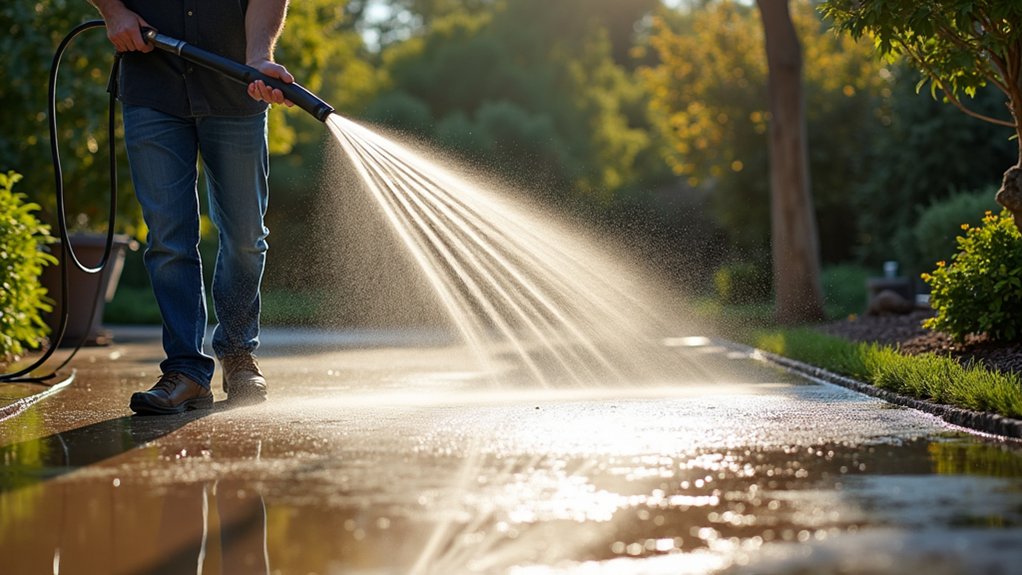
Avoid top pressure washing pitfalls by steering clear of using excessive pressure, which risks damaging surfaces or causing injuries. Choose the right cleaning solutions carefully to prevent surface damage and environmental harm. Don’t neglect essential safety techniques: always wear protective gear and maintain equipment properly. By focusing on these areas, you’ll guarantee effective, safe cleaning. There’s much more to master in pressure washing, so stay informed and enhance your expertise!
Excessive Pressure Use

When using a pressure washer, it’s essential to understand that excessive pressure can lead to significant issues both for you and the surfaces you’re cleaning. High-pressure washing may cause injuries like lacerations or puncture wounds, and these can escalate to infections if not treated.
Surfaces suffer too; excessive pressure strips paint, splits wood, and even cracks concrete, causing surface damage that’s costly to repair.
Be mindful of environmental hazards, as improper waste disposal contaminates water sources, while turbulent jets disturb wildlife. The slippery residues left behind can lead to slip-fall accidents, especially when lighting is poor. Additionally, using high pressure can lead to contaminated waterways, which negatively impacts local aquatic ecosystems.
Always use appropriate settings to protect yourself and the environment, ensuring your pressure washing efforts are both safe and effective.
Improper Cleaning Solutions
While pressure washing can be an efficient way to clean surfaces, using improper cleaning solutions can undermine your efforts and cause unnecessary damage.
Incorrect detergent selection is a common mistake—using generic cleansers not meant for specific surfaces, like wood or concrete, can lead to damage.
Improper application techniques, such as spraying horizontally instead of vertically, contribute to streaks and uneven cleaning.
Chemical over-reliance should be avoided; harsh chemicals aren’t always necessary and can harm the environment.
Insufficient testing protocols, like skipping detergent tests on small areas, can result in unexpected damage.
Finally, inadequate rinsing and finishing, such as leaving detergent residues, diminishes effectiveness.
For best results, share documents and discuss strategies with your team members to guarantee proper procedures. Additionally, using eco-friendly alternatives can help mitigate the environmental impact of pressure washing while maintaining effective cleaning.
Safety and Technique Neglect
Now that we’ve established the importance of using correct cleaning solutions, let’s focus on the vital aspects of safety and technique in pressure washing.
Safeguarding begins with proper protective gear—don’t skip on gloves, long sleeves, or weatherproof footwear. These items protect against injuries and provide better grip.
Operational practices play a significant role too. Avoid using gas-powered units in enclosed spaces, and always adhere to pressure recommendations for each surface type.
Improper nozzle use, like employing zero-degree nozzles or failing to adjust for surface type, can cause damage. Regular maintenance of nozzles guarantees peak performance, so don’t ignore this step.
Conclusion
Avoiding common pressure washing mistakes keeps your property looking pristine, much like a polished gem. By managing pressure levels, choosing the right cleaning solutions, and prioritizing safety and technique, you guarantee effective results without damaging surfaces. Remember, a little care goes a long way in maintaining your investments. As you tackle your next cleaning project, let these tips guide you to success, transforming challenging tasks into manageable ones with confidence and ease.